

BLOG

Color Managed Workflow
If you've ever had printed out a page on your desktop Inkjet printer and held it up to the monitor, chances are you've been a little disappointed at how far off the printed output is from your monitor. Well, it's a common heartbreak, and that's because your monitor and ink on paper are two very different realities. And if you compare your screen and your Inkjet print to the final printed piece, you may very well be looking at three rather different versions of your job.It's really maddening. So what you do you hang your hat on? Well, the solution to this problem is to have a fully color managed workflow. But that can be expensive, kind of confusing, and a bit complicated to implement. If you want to fully pursue the color managed workflow, you have to invest in expensive equipment to profile your monitor and all your printers. But if you don't want to go that far, you can still improve your monitor substantially by using the colorimeter, Now, you can expect to pay from $200 and up for a colorimeter. The way it works is the colorimeter and its software combine to send color signals to the monitor.The colorimeter reads the values and then compares them to an internal ideal value. And then it sets up a Reference File that's called a Profile, that's used to control the output of your monitor. Now, if you're part of a work group that produces a lot of work for print, it actually might be worth hiring a color management consultant to come in, profile all of your equipment for you. They'll use their own sophisticated equipment to set up your monitors and printers without you having to make the investment in that equipment. Now, they'll probably recommend that calibrations and profiles be updated periodically, especially if you add new equipment. Now, in color-critical environments, for example in printing plants fresh profiles are often generated just after new ink is installed in a printer, if that printer is being used for generating proofs.
You should also consider the lighting conditions in your work area. If you have ever gone to a printing company to view proofs, you've probably stood in a viewing booth that's specially constructed for optimal viewing conditions. It may even be a stand-alone room. It's usually painted a neutral gray, and special lights are installed. You may have heard them referred to as D50 or 5000 K lights, and that refers to their color temperature, the K if you care, stands for Kelvin, and that's the temperature measurement system. So why is 5000 K chosen? Well, it's supposed to mimic the temperature of sunlight at high noon. The higher the color temperature, the bluer the light source, and as you go below 5000 K, lights get warmer. For example, the household incandescent bulbs around 2800K. Now, those official viewing sources can be really expensive, but I am going to let you in on a little secret. You can come very close by using fluorescent bulbs from the hardware or home improvement store. Just make sure it says 5000 K or D50 on the bulb. Now, I realize that it's true that your final printed piece is going to be viewed under a wide variety of lighting conditions, from kitchen fluorescents to candlelight, to incandescent living room lamps. So why pick a particular color temperature for viewing? Well, it's for consistency. There has to be some constant to ensure color accuracy, especially when you're judging color corrections from one proof to the next or you are looking at a press proof. You might even avoided wearing clothing that could reflect on the monitor or on a proof that you're viewing with the customer. Now, maybe that's why we all wear black and gray, it's not because we're stylish, we're just being color correct.
If you want to delve deeper into color management, I'd recommend Chris Murphy's course for lynda.com that's called Color Management Essential Training, and Chris is also one of the authors of Real-World Color Management, which is sort of an instant classic on the subject. Don't be intimidated by the heft of the book. It's very readable, very understandable, and it's actually funny in spots--which is pretty amazing given that that's a technical and arcane topic. Now, while calibrating, profiling, and special lighting might seem like an awful lot of extra work, all those things together can go a long way toward giving you more realistic expectations of your final printed result.

Color Wheel
Did you enjoy this blog post? If so, then why not:
Leave Comment | Subscribe To This Blog | Email Me

Rustic Cabin Bedroom Interior
Here, is the bedroom concept for the "Rustic Cabin" rendering.
"Rustic Cabin" Interior Bedroom
Did you enjoy this blog post? If so, then why not:
Leave Comment | Subscribe To This Blog | Email Me
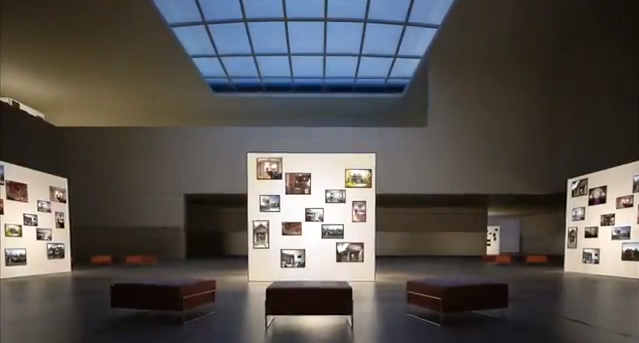
Architectural Demo Reel 2012
Did you enjoy this blog post? If so, then why not:
Leave Comment | Subscribe To This Blog | Email Me
Jacob Barnett: Forget What You Know
Teenage genius Jacob Barnett wants you to stop learning and start thinking, in this inspiring TEDx talk.

Did you enjoy this blog post? If so, then why not:
Leave Comment | Subscribe To This Blog | Email Me
Skill vs. Creativity
Skill is applied knowledge. It's when you know something and can use it over and over again - a little like programming a computer to perform certain functions. That's skill. Some teachers are apposed to skill because they believe it kills creativity. But, in fact, it's the opposite - skill gives you the capacity to create.
Creativity takes place in the unknown - the discovery of a form or image not yet manifested. It is why artists make art. Consider Van Goch in the last 70 days of his life - he created about one painting a day. Why? It doesn't seem his motivation was money. Just imagine coming each day with a painting, propping it up on the bed, and wondering where the image come from. I believe what motivates him to go out the next day and paint again and again was the excitement of not knowing what was going to happen next.

Did you enjoy this blog post? If so, then why not:
Leave Comment | Subscribe To This Blog | Email Me
How To Make A Good Rendering
How to make a good rendering from Pure on Vimeo.
Did you enjoy this blog post? If so, then why not:
Leave Comment | Subscribe To This Blog | Email Me
Money Is The Most Important Thing
“If you say that getting the money is the most important thing, you will spend your life completely wasting your time. You’ll be doing things you don’t like doing in order to go on living, that is to go on doing things you don’t like doing, which is stupid. Better to have a short life that is full of what you like doing, than a long life spent in a miserable way.”
Did you enjoy this blog post? If so, then why not:
Leave Comment | Subscribe To This Blog | Email Me
Pixels, Image Size and Resolution – Basix
Are you new to Photoshop? Have you been trying to teach yourself the basics of Photoshop but have found the amount of educational material available on the net a bit overwhelming? As the world’s #1 Photoshop site, we’ve published a lot of tutorials. So many, in fact, that we understand how overwhelming our site may be to those of you who may be brand new to Photoshop. This tutorial is part of a 25-part video series demonstrating everything you will need to know to start working in Photoshop.
Photoshop Basix, by Adobe Certified Expert and Instructor, Martin Perhiniak includes 25 short video tutorials, around 5 – 10 minutes in length that will teach you all the fundamentals of working with Photoshop. Today’s tutorial, Part 3: Pixels, Image Size and Resolution will explain the theory behind how pixel images work. It will also explain a bit about the crop tool, image size and resolution. Let’s get started!
Did you enjoy this blog post? If so, then why not:
Leave Comment | Subscribe To This Blog | Email Me
The Digital Art Community
Woot! My Rustic Cabin Rendering made the cover of the on-line forum, The Digital Art Community.
Did you enjoy this blog post? If so, then why not:
Leave Comment | Subscribe To This Blog | Email Me
An Expert
“An expert is a person who has made all the mistakes that can be made in a very narrow field.”
Did you enjoy this blog post? If so, then why not:
Leave Comment | Subscribe To This Blog | Email Me

Rustic Cabin
Here, is a rustic cabin rendering I am working on. The proposed cabin is located in the North-woods of Minnesota.
Rustic Cabin Rendering
Rustic Cabin Rendering
Did you enjoy this blog post? If so, then why not:
Leave Comment | Subscribe To This Blog | Email Me
Unnecessary Complexity
As a rendering develops, you may realize that the solution to various compositional problems are resulting in unnecessary complexity. Your rendering might be deteriorating into fragmentation, and it commonly results from the artist's working on one segment of the composition at a time. While this may be a necessary part of the developmental phase of the rendering, such as isolated solutions may result in a lack of visual unity in the overall composition. However, by applying the principle of the economy, the rendering may regain a sense of unity.
Employing the principle of the economy means composing with efficient expressing an idea as a simply and directly as possible with no arbitrary or excessive use of the elements. Economy has no rules but rather must be an outgrowth of the artist's instincts. If something works with respect to the whole, it is kept; if disruptive, it may be reworked or rejected. A rendering is most successful when you express your ideas as simply and directly as possible.

Complexity
Did you enjoy this blog post? If so, then why not:
Leave Comment | Subscribe To This Blog | Email Me
Digital Asset Library
Over the past couple decades, I have accumulated a large library of digital assets. These digital assets are the bread-n-butter to my digital workflow. A well organized stock pile of high quality 3D model and textures is fantastic, but they come with time. I remember spending hours looking for free 3D models to use in projects. Those days are long gone, but sometimes I need something that I just never needed before. My modeling skills are pretty high, but my time is relatively valuable, so off to the internet I go. Unlike a couple of decades ago, I have larger budgets, so a quick trip to Turbosquid usually does the trick, but before I go there, I always stop over at arcive3d.

Did you enjoy this blog post? If so, then why not:
Leave Comment | Subscribe To This Blog | Email Me
The Sketchbook Project
The Sketchbook Project is the flagship program of the Art House Co-Op, a New York-based organization that stages collaborative art projects. beginning in 2013, participants may sign up at any point and assign their book to multi-city tour of their choices. For further information on entering or viewing The Sketchbook Project, as well as other Art House Co-Op initiatives, visit www.arthousecoop.com
The Sketchbook Stories from Art House Co-op on Vimeo.
Did you enjoy this blog post? If so, then why not:
Leave Comment | Subscribe To This Blog | Email Me
Susan Cain Helped Introverts Find Their Voice; Now, She'll Teach Them To Embrace Public Speaking
Susan Cain made a splash with "Quiet: The Power of Introverts in a World That Can't Stop Talking." Now, she plans to help introverts overcome their fear of public speaking. Here are her tips for taking the stage successfully.
Did you enjoy this blog post? If so, then why not:
Leave Comment | Subscribe To This Blog | Email Me

V-Ray Color Mapping
V-Ray Color Mapping Infographic
Did you enjoy this blog post? If so, then why not:
Leave Comment | Subscribe To This Blog | Email Me
I Am Now On Google+
Now there's another way you can connect with me. Add me to your Google+ circle where I will share links to blogs and articles, photos, and interesting videos!
Did you enjoy this blog post? If so, then why not:
Leave Comment | Subscribe To This Blog | Email Me
How Does The Magic Start?
“All the magic, be it in code or design, starts with a clear mind, pen and a blank paper.”
Did you enjoy this blog post? If so, then why not:
Leave Comment | Subscribe To This Blog | Email Me
Caesarea Villa
Architect: Gottesman–Szmelcman Architecture
Music: Moshe Chitayat
Did you enjoy this blog post? If so, then why not:
Leave Comment | Subscribe To This Blog | Email Me
Some say it takes 10,000 hours, or 10 years, to be a master of something. To create photo-real architectural renderings it takes a lot of hard work, and only a few have mastered the craft of photo-real architectural renderings. It takes a lot of screen time, more than you might imagine.
Some say that unless you are in the photo-real business nobody is noticing the subtleties that keep an image from being photo-real, but I would have to disagree. Humans have a keen sense of perception and can perceive even the smallest errors in what they are viewing, which makes them feel uncomfortable.
The uncanny valley is a hypothesis in the field of 3D computer animation which holds that when human replicas look and act almost, but not perfectly, like actual human beings, it causes a response of revulsion among human observers.

One study conducted in 2009 examined the evolutionary mechanism behind the aversion associated with the uncanny valley. A group of five monkeys were shown three images: two different 3D monkey faces (realistic, unrealistic), and a real photo of a monkey's face. The monkeys' eye-gaze was used as a proxy for preference or aversion. Since the realistic 3D monkey face was looked at less than either the real photo, or the unrealistic 3D monkey face, this was interpreted as an indication that the monkey participants found the realistic 3D face aversive, or otherwise preferred the other two images. As one would expect with the uncanny valley, more realism can lead to less positive reactions, and this study demonstrated that neither human-specific cognitive processes, nor human culture explain the uncanny valley. In other words, this aversive reaction to realism can be said to be evolutionary in origin
Our clients don't understand what it takes to produce a photo-real rendering. But, they expect something that makes them feel comfortable when viewing it, and not something that seems off, or wrong. There is a wide gamut of work, which is being called photo-real, but unless it looks like a photo, it's not photo-real.
Did you enjoy this blog post? If so, then why not:
Leave Comment | Subscribe To This Blog | Email Me