

High-angle architectural rendering
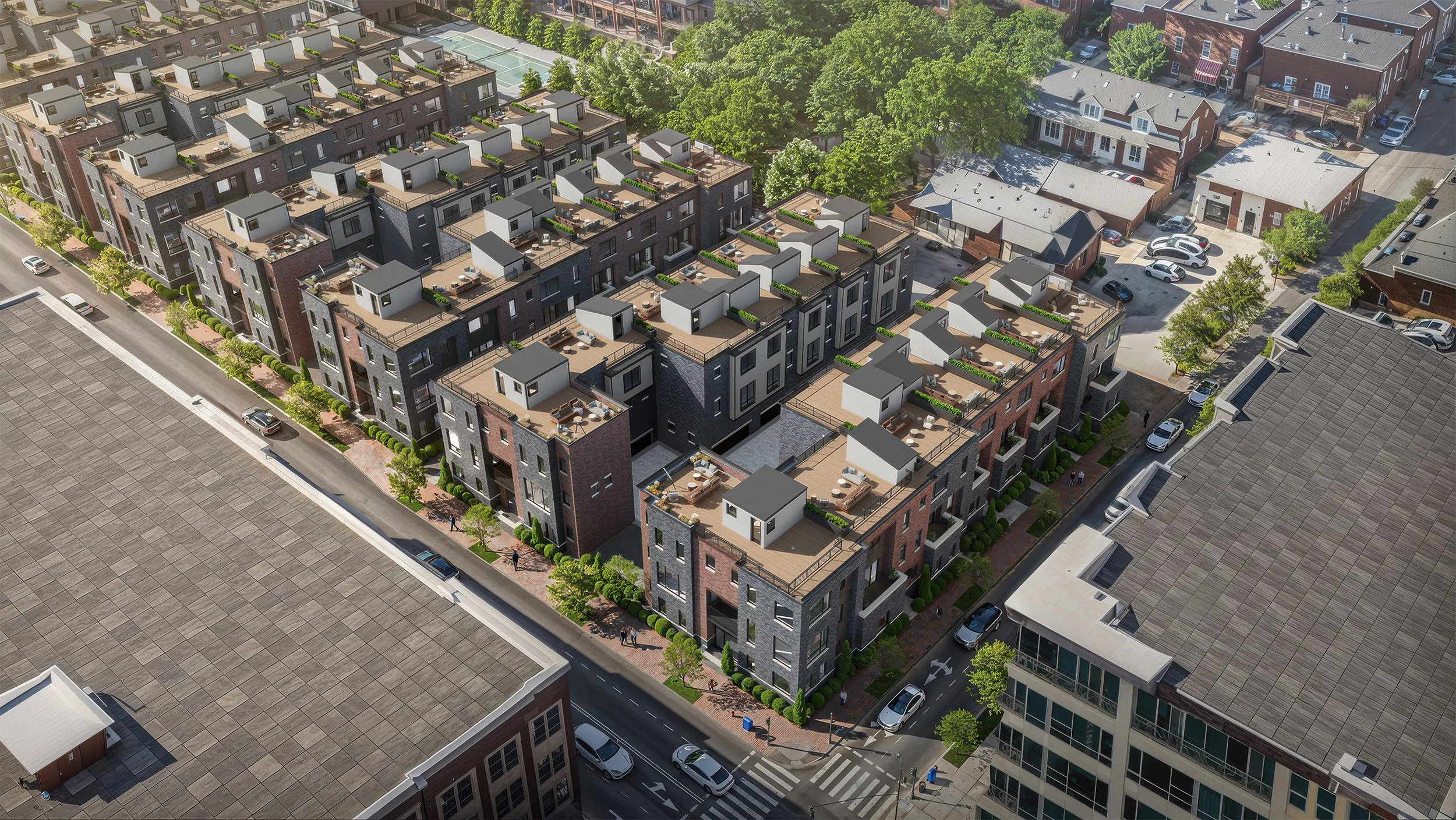
High-angle architectural rendering
This high-angle architectural rendering showcases a modern, multi-unit residential development that blends seamlessly into a vibrant urban fabric. The image serves as a powerful proof of concept, illustrating how a sophisticated visualization can bridge the gap between a blueprint and a reality that potential buyers and city officials can truly "feel."
The Power of Context and Detail
What makes this rendering particularly effective is its meticulous attention to context. Unlike isolated 3D models, this project is nestled within a fully realized neighborhood. We see existing brick buildings, mature trees, and realistic street life—pedestrians on the sidewalk, cars parked along the curb, and rooftop gardens in bloom. This "lived-in" quality is essential for winning community and planning approval, as it demonstrates how the new density respects the existing architectural scale while revitalizing the block.
Visualizing Lifestyle Before Groundbreaking
To sell units before construction starts, a rendering must sell a lifestyle, not just square footage. Here, the focus on rooftop terraces is a masterstroke. By populating these private outdoor spaces with greenery and lounge furniture, the visualization invites potential residents to imagine themselves hosting a summer dinner or enjoying a morning coffee with a view of the city. This aspirational quality transforms a technical drawing into a desirable home, enabling developers to secure pre-sales by providing a tangible "look and feel" that aligns with the premium price point.
Precision in Materiality
The rendering excels in showcasing the interplay of modern materials. The juxtaposition of dark masonry with warm brick accents and clean, white geometric pop-ups creates a dynamic facade. High-fidelity textures—from the gravel on the rooftops to the subtle reflections in the glass—give the structure a sense of permanence and quality. This level of detail builds trust with investors and buyers, proving that the final product will be a high-end addition to the Denver skyline.
Ultimately, this image is more than a picture; it is a strategic communication tool. It communicates density without overcrowding, modernism without coldness, and a future neighborhood that feels immediately accessible today.
Would you like to explore how to integrate these visuals into a digital marketing campaign or a presentation for a city planning board?